
Notes on a strike
Most Israelis want the war to end.
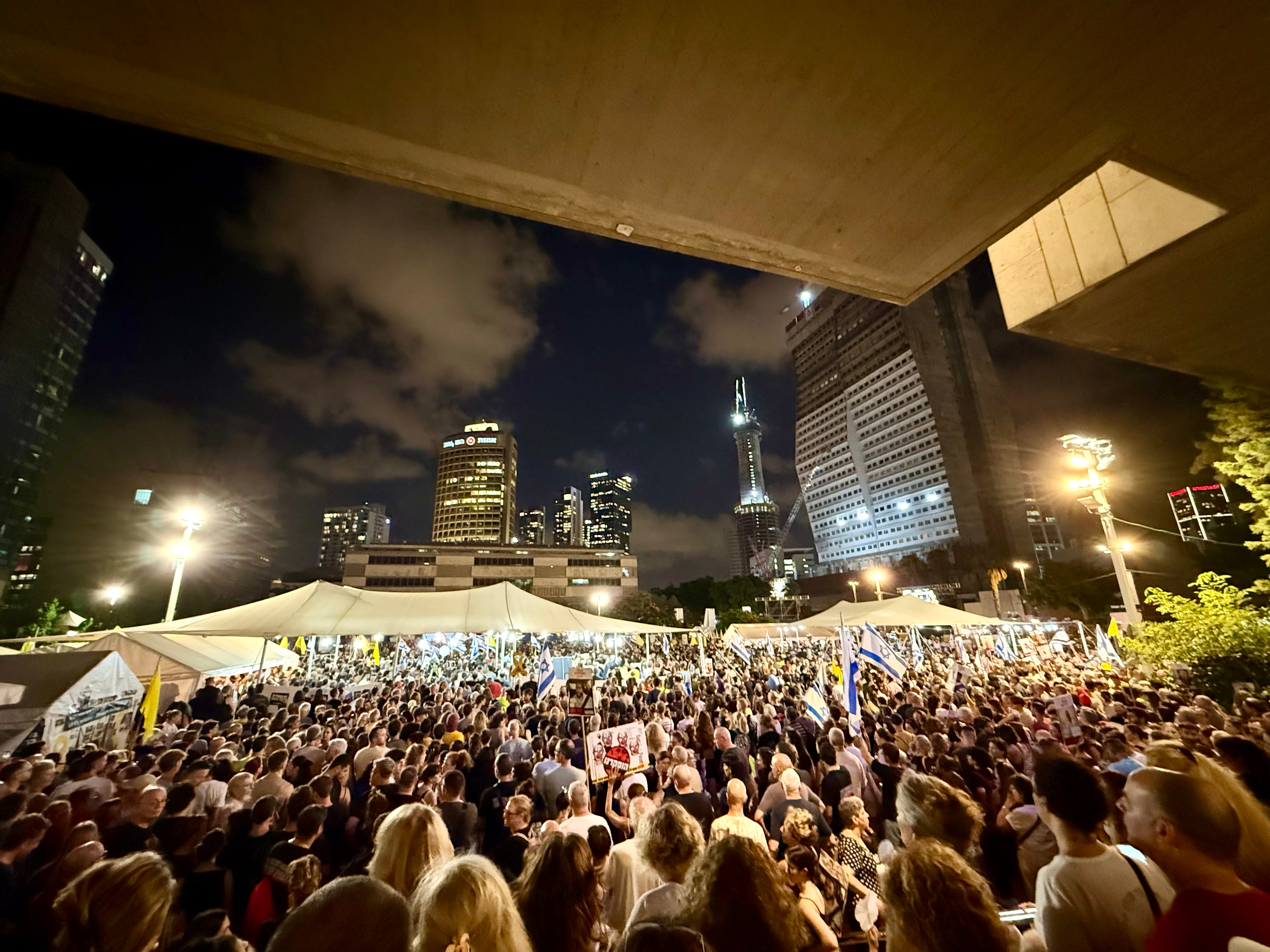
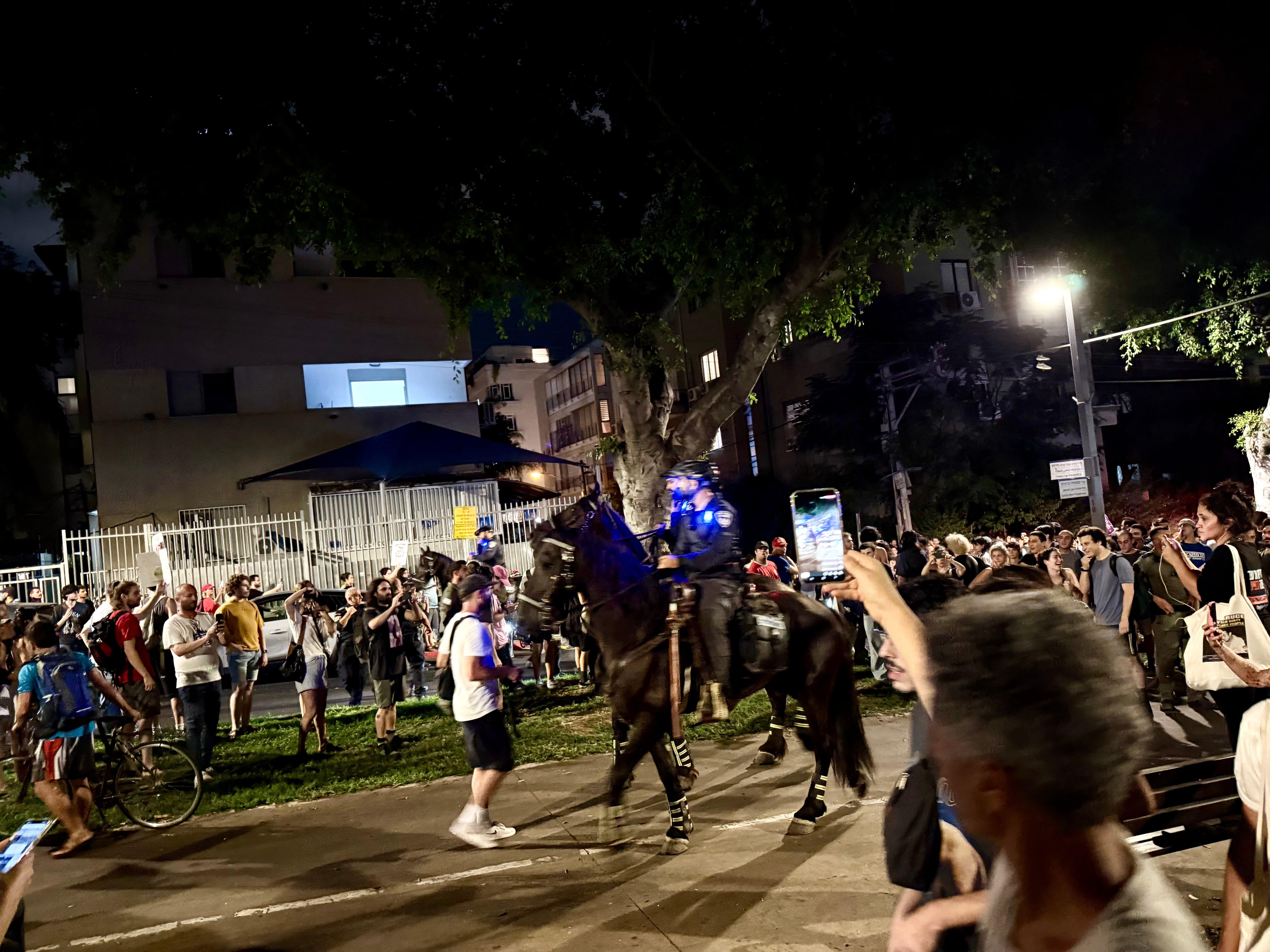
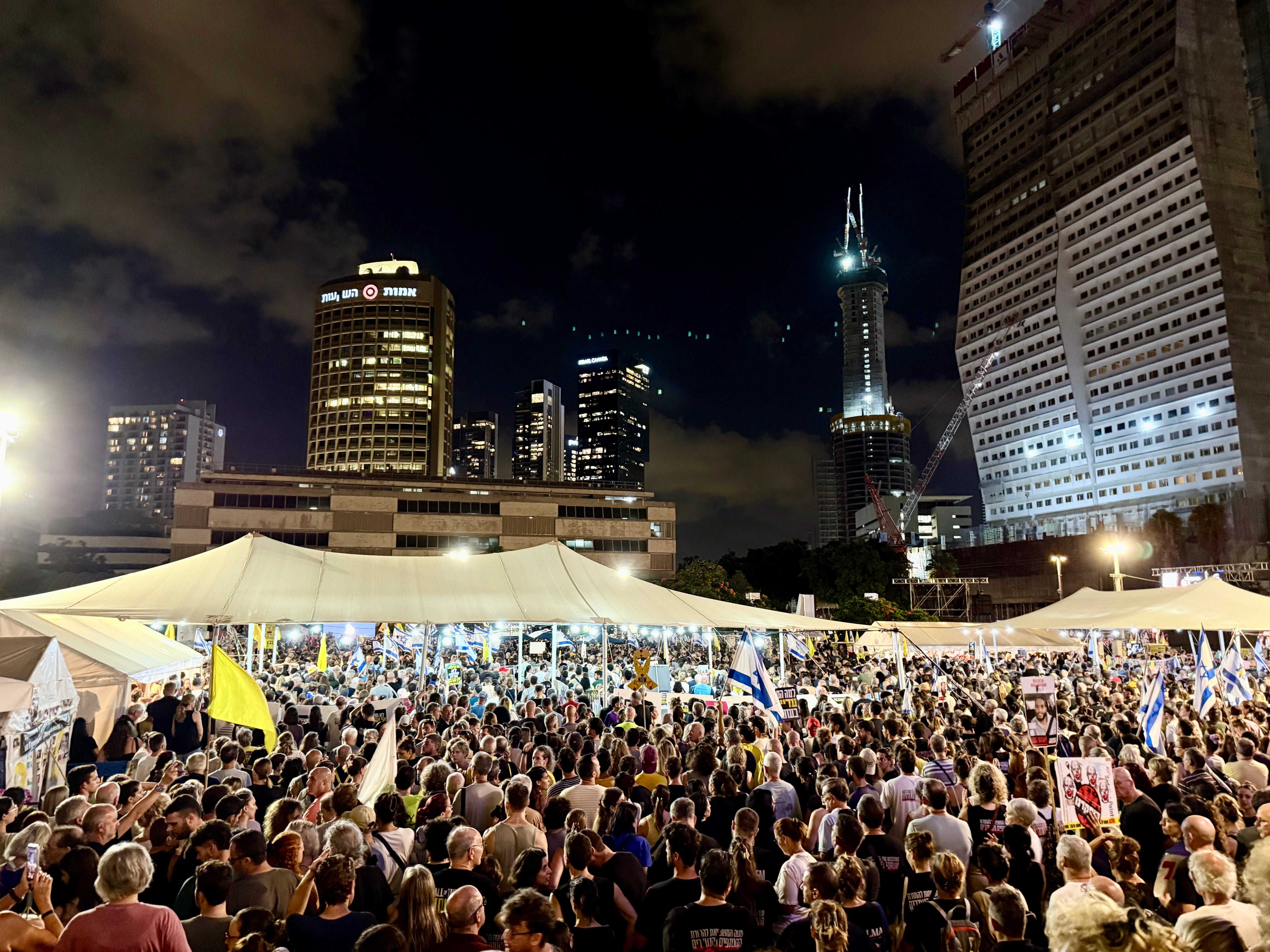
Several hundred thousand people took to the streets in Tel Aviv last night to demand a hostage deal and an end to the war in Gaza. The mass demonstration was the culmination of “a day of disruption” called by hostage families in protest of the Israeli government’s stated plan to reoccupy Gaza: a move that would exacerbate the ongoing humanitarian catastrophe in the devastated territory and all but guarantee the deaths of the living hostages still held by Hamas and other Palestinian militant groups.
According to protest organizations, roughly 400,000 people joined the demonstration in Tel Aviv. It certainly felt that way. The streets around what has come to be known as “Hostages’ Square” were thronged with people. The square itself was overflowing, the crowd packed in so tight together that it was hard to breathe; the noise from the chanting and drumming echoed for blocks beyond it, down the city’s central boulevards. It was, by most accounts, the largest demonstration since October 7.
400,000 is 4 percent of Israel’s population, a portion greater than the oft-cited figure of 3.5 percent of a population that Erica Chenoweth has claimed is necessary for a nonviolent civil resistance movement to succeed. Imagine if 4 percent of the U.S. population showed up to a single protest—that would be around 13.5 million people.
The last half-decade or so has, I think, challenged the universal applicability of Chenoweth’s “3.5% rule.” It may not function in an age of bald-faced elite impunity and algorithm-fueled polarization. Leaders like Benjamin Netanyahu have learned that they can outlast the public, demoralize and demobilize their opposition.
Still, the massive showing in Tel Aviv reflected something true, a fact reflected in opinion polls and palpable in the streets. Most Israelis want the war to end.
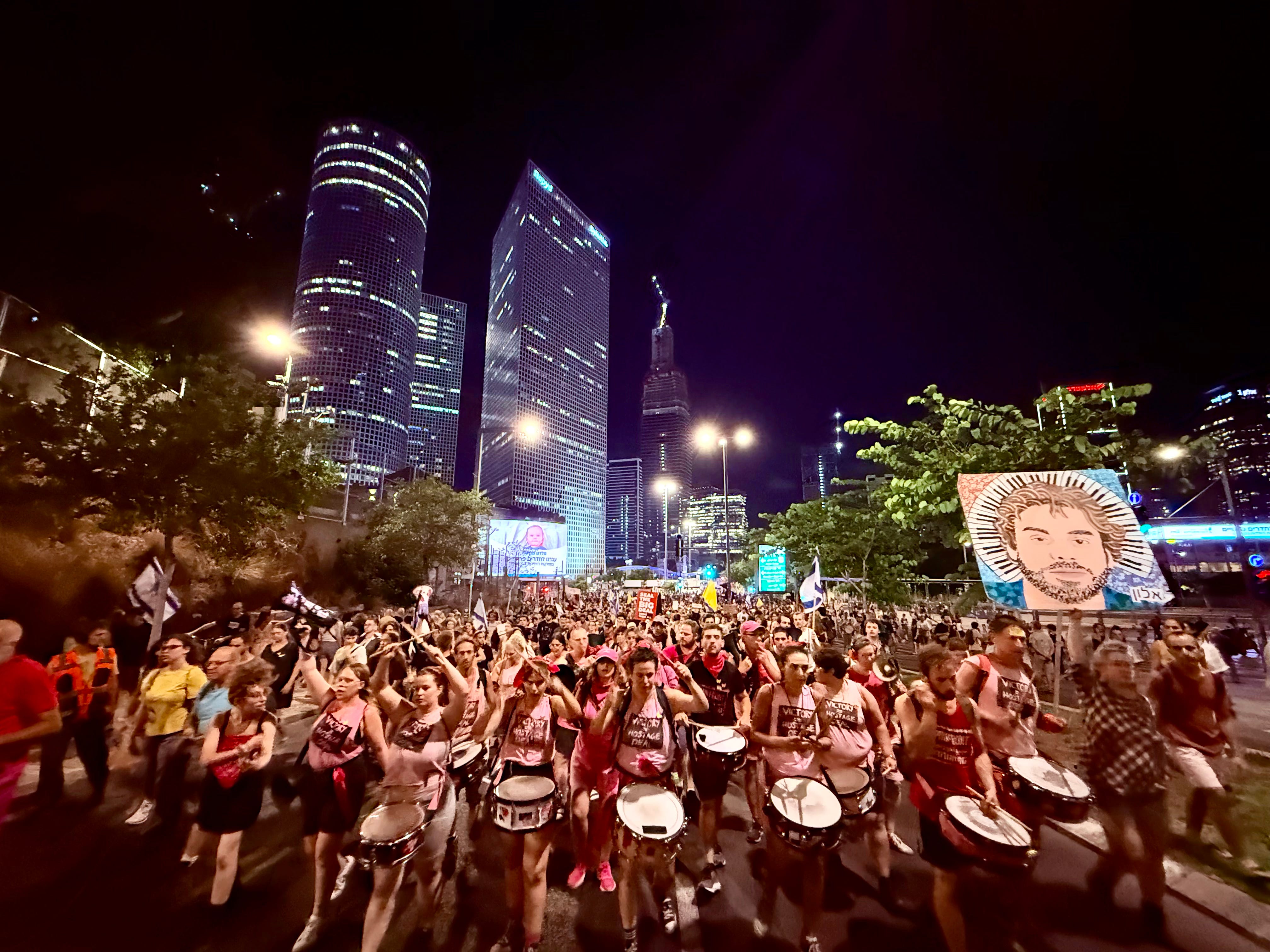
They are anguished by two years of death and fear. Almost everyone knows someone who was killed on October 7 or fighting in the war that has followed. They feel that to abandon the hostages would be to violate an integral tenet of Israeli civic identity, to contravene its most basic principle of social solidarity. (Ironically, the notion that the country would go whatever lengths necessary to protect its citizens was once symbolized by the raid on Entebbe, during which Yoni Netanyahu was killed—and is now being systematically dismantled by his younger brother, Benjamin).
They see, correctly, that Netanyahu has prolonged the war in service of his own political survival. And, yes, many are outraged and ashamed by the Israeli army’s brutal prosecution of the war, the ethnic cleansing of Palestinians in Gaza, the systematic destruction and the siege. Even, or perhaps especially, those who deny the commission of war crimes by the army in Gaza know, in the end, that such charges are real. More than two dozen soldiers are reported to have committed suicide since the start of the war. There is a real recognition that a society that dehumanizes another people will, before long, turn that dehumanization onto itself.
An anti-war movement, to be sure, is not a pro-peace movement, which is also distinct from a pro-justice movement. The Vietnam War—which killed an estimated 2,000,000 Vietnamese civilians—did not end because Americans developed deep compassion and empathy for the Vietnamese. The war’s loss of legitimacy, the sense that it had become unjust, was important in increasing opposition. But, ultimately, it ended because the war’s cost became higher than Americans were willing to bear.
Israeli society is going through something of a parallel process. Many of those who were willing to participate in the war two years ago are no longer willing to now. The toll—physical, psychic, spiritual—has grown too high. The war has lost its legitimacy in the eyes of much of the public. The mounting international pressure is being felt and concern about Israel’s growing isolation is having its effect. These are the ingredients of anti-war movement, and that is in function, if not in name, what the protest movement in Israel has become.
What would it take for this movement to become a pro-peace movement or, better, a pro-justice? Frankly, I do not know. The opposition in Israel suffers from an endemic lack of courageous leadership. One would think that, with 4 percent of the country on the streets, politicians would be rushing to join the barricades. But except for the usual suspects on the left, that is not the case. There is an utter absence of vision, a psychic disconnect that has enabled many people to think, mistakenly, that the status quo can simply go on in perpetuity: a profound stuckness.
This is an ailment that afflicts other movements around the world that have arisen to challenge authoritarian populism. Faced with a radicalized right bent on overthrowing the existing order, the liberal opposition becomes, almost by definition conservative: they wish to go back to how things were. In Israel’s case, the wish is to return to the world before the war, before the Netanyahu government’s declaration of its intent to carry out a judicial auto-coup.
Yet the raw materials are there, or so I would like to think, for something more. Perhaps this is an instance of my idealism coming into conflict with my realism; wishful thinking rather than sober analysis. There is an almost ineffable feeling—maybe naive, maybe foolish—that comes from the power of people physically coming together to demand an end to a war, which cannot help but fuel even the most feeble ember of hope. There is an almost spiritual quality to the power of a crowd in motion pushing for a way out of a reality that has become unbearable.
Nearly half a million people in the streets. A movement in search of a vision that has not yet come.
Mairav Zonzsein, 8/26/25: "76% of Jewish Israelis believe there are no innocents in Gaza (42% fully and 34% partially). This includes a majority who voted for “opposition” parties. In other words, a genocidal society." https://x.com/MairavZ/status/1960261925910323309
Reading this, I wondered why the author placed "which killed an estimated 2,000,000 Vietnamese civilians" in italics. Is this supposed to emphasize to the reader that the US killed more people in Vietnam than Israel has in Gaza? If so, it's worth noting that the total population of Vietnam in the 1960s was around 38 million. South Vietnam, where most civilian casualties took place, had a population around 19 million people. This suggests that 5% of the total civilian Vietnamese population, and perhaps 8% of the population in the South, were killed in the American war. If the pre-genocide population of Gaza was 2 million, the equivalent figures to compare with Vietnamese casualties would be in the range of 100,000-150,000. This is not far off from the estimate published in the Lancet in January 2025 (before the last half-year of horrors). The comparison hardly reflects well on Israel, particularly when one takes into account the respective durations of the two wars.